Selecting the Right CPU for Multi-Threaded Ranking Tools

Enhancing Hardware for High-Thread Online Search Engine Ranker Performance in 2026
The existing year 2026 has brought a new requirement for automated SEO. High-thread counts in automated search engine ranker software no longer operate successfully on the budget-tier virtual personal servers that controlled the market a couple of years earlier. As online search engine have actually fine-tuned their ability to procedure incoming signals, the large volume and speed required to keep presence have pushed hardware requirements to new heights. To run countless synchronised threads without crashing or seeing an enormous drop in success rates, the technical requirements of a VPS need to be carefully selected to match the heavy I/O demands of the software.
Many experts focused on search engine optimization now prioritize raw CPU clock speeds and low-latency memory over simple core density. While a high core count is advantageous for multi-tasking, Browse Engine Ranker relies greatly on how rapidly each thread can perform its specific task before moving to the next. In 2026, processors with high single-core performance, such as the most current versions of AMD EPYC or Intel Xeon Scalable processors, are the favored option for those wanting to scale their operations in the global digital market.
CPU Architecture and Multi-Threading Demands
The core of any high-performance VPS is the processor. For a tool that manages thousands of concurrent connections, the CPU must manage not just the software itself, but likewise the overhead of Windows Server, proxy management, and captcha solving. In 2026, the shift toward DDR6 memory support and PCIe 6.0 lanes has actually made an obvious difference in how data moves between the processor and the rest of the system. When a VPS is oversold, which is common with cheap service providers, the "take time" from other users on the very same node can paralyze the efficiency of a project.
Efficient scaling needs a VPS that uses dedicated CPU resources. Burstable cores are often insufficient since as soon as the software application hits its stride, the CPU usage stays pinned at a high percentage. This continual load frequently activates throttling on lower-end hosts. Experts who concentrate on Asia Virtual Solutions Growth often find that CPU clock speed is more vital than core count alone. A 16-core device performing at 4.5 GHz will usually surpass a 32-core machine performing at 2.5 GHz for this specific type of automation, as the lowered latency in between thread cycles causes greater successful submission rates.
Memory Allotment and Database Management in 2026
RAM is frequently the very first traffic jam encountered when scaling. Online search engine Ranker maintains a massive internal database of confirmed targets and international lists. As these lists grow into the millions of URLs, the memory needed to index and search them in real-time boosts. In 2026, a minimum of 32GB of RAM is thought about the entry point for a severe multi-threaded setup, with 64GB or 128GB being more typical for those running 500 threads or more.
Memory speed also plays a function. With the adoption of DDR6 in contemporary data centers, the bandwidth readily available to the CPU has actually doubled compared to the standards of several years back. This enables the software to pull data from the verified lists much faster, lowering the "idle time" of the threads. Without sufficient RAM, the system is required to use the page file on the disk, which, even with the fastest storage, is significantly slower than system memory and triggers the whole application to hang throughout heavy operations in any competitive region.
Storage Speeds: The Importance of NVMe Gen 6
The significance of storage speed for link building software can not be overemphasized. Each time a thread checks a URL, logs a success, or updates the status of a target, it composes to the disk. Standard SSDs, and even older NVMe drives, can fight with the random write speeds needed when 1,000 threads are all attempting to upgrade the database at the same time. By 2026, NVMe Gen 6 drives have actually ended up being the requirement for high-performance SEO VPS companies, offering sequential and random read/write speeds that avoid the database from becoming a traffic jam.
If the disk I/O hits 100% capacity, the software application will seem running, however the actual output will drop to near absolutely no. This is often why users see their "submissions per minute" drop over time. The drive just can not stay up to date with the log files and database updates. Picking a VPS provider that uses local NVMe storage instead of network-attached storage (NAS) or SAN is vital. Local storage ensures the most affordable possible latency, which is a significant aspect in keeping high submission speeds in major tech centers.
Network Connection and Proxy Latency
Network performance in 2026 has to do with more than just a 1Gbps or 10Gbps port. It has to do with the quality of the peering and the latency to the proxy providers. When running a multi-threaded campaign, the VPS is continuously making countless outgoing requests. If the network interface card (NIC) or the host's backplane is crowded, packet loss will happen. This results in failed connections and squandered proxy data.

When looking at Asia Virtual Solutions Growth, the capability to process thousands of simultaneous connections figures out the success of a campaign. A premium VPS needs to use a 10Gbps uplink with a warranty of low-latency routing to significant foundations. Because a lot of SEO automation depends on a complicated web of rotating proxies, captcha solvers, and target websites, even a 50ms delay in network response can considerably decrease the overall variety of links developed per hour. Lots of sophisticated users now try to find VPS locations that are geographically close to their proxy provider's primary exit nodes to slash off every possible millisecond of latency.
The Function of Operating System Optimization
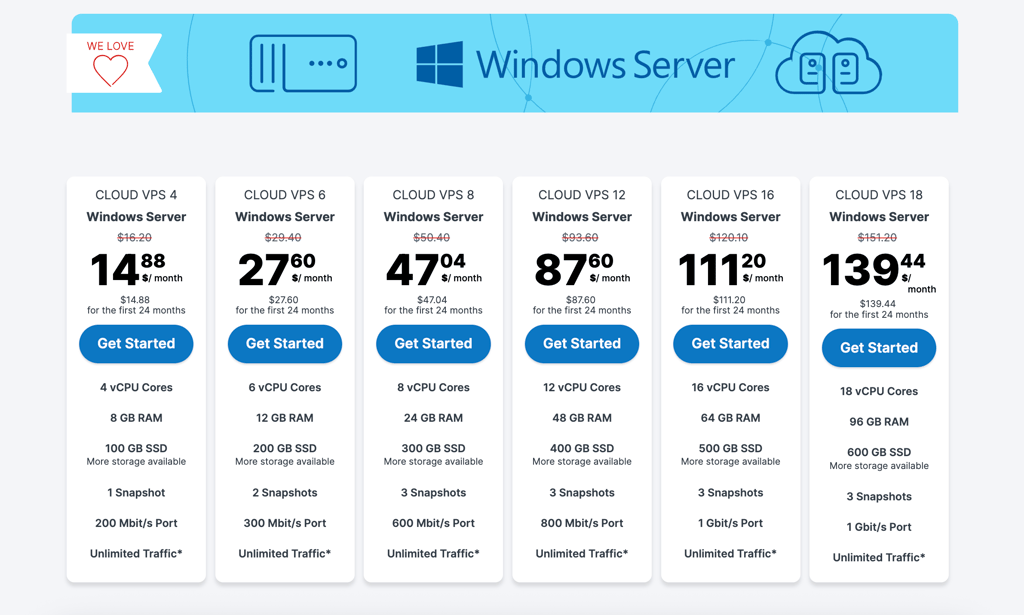
Windows Server 2025 and the early 2026 builds are the most common os for these jobs. A basic "out-of-the-box" setup is frequently puffed up with services that consume valuable CPU and RAM. Hardening and slimming down the OS is a needed step for high-thread efficiency. Disabling unnecessary visual effects, Windows updates throughout runtimes, and background telemetry can maximize 5-10% of system resources, which can then be rerouted to the software.
Virtualization technology likewise matters. KVM (Kernel-based Virtual Device) stays the gold requirement in 2026 for SEO tasks because it supplies much better seclusion and more foreseeable resource allocation than older innovations. It allows the VPS to behave more like a dedicated server, ensuring that the heavy multi-threading of the ranking software does not interfere with the host's kernel or other virtual devices on the same hardware. This seclusion is essential for stability, especially when running the software 24/7 for weeks at a time.
Handling Heat and Hardware Longevity
While the user does not see the physical server, the method a service provider manages heat in 2026 effects the performance of the VPS. High-thread SEO automation is one of the most resource-intensive tasks a server can perform, typically keeping the CPU at 80% load or higher for extended periods. Inexpensive suppliers with bad cooling solutions may experience thermal throttling, where the CPU speed is automatically lowered to avoid damage. This results in an unexpected, inexplicable drop in software efficiency. Quality providers in modern data hubs use liquid cooling or innovative air flow styles to guarantee that high-frequency CPUs can keep their turbo speeds forever.
Scaling Out vs. Scaling Up
A common argument in the SEO community in 2026 is whether to utilize one huge VPS or numerous smaller ones. Scaling "up" to a device with 128GB of RAM and 64 cores can be remarkable, however it creates a single point of failure. If the OS crashes or the software hangs, the whole operation stops. Scaling "out" by utilizing 4 or 5 mid-range VPS instances enables for better risk management and often much better resource utilization. Search Engine Ranker often has a hard time to efficiently use more than 32 or 64 logical processors due to internal thread contention. By splitting the workload across numerous makers, users can typically accomplish a higher total submission rate than they would on a single high-end server.
This distributed approach likewise aids with network management. Numerous VPS instances offer multiple IP addresses and can be spread throughout different information centers, minimizing the risk of a single network interruption taking down an entire project. When each VPS is enhanced with its own devoted resources, the cumulative power often surpasses what a single "super-server" could offer for the very same cost.
Choosing the Right Service Provider for 2026
Picking a host for automated SEO needs looking past the marketing fluff. In 2026, the very best suppliers are those who are transparent about their hardware and their "contention ratios." A provider that assures "endless" everything for a low rate is most likely overselling their nodes, which will cause bad performance once you start pushing the thread count. Rather, looking for "Efficiency" or "VDS" (Virtual Dedicated Server) plans ensures that the resources you spend for are in fact readily available when the software requires them most.
The tech specifications for a high-performance SEO VPS in 2026 are clear: high-frequency CPU cores, DDR6 RAM, NVMe Gen 6 storage, and a low-latency 10Gbps network. When these aspects are integrated and appropriately enhanced, the potential for scaling search engine ranker is limited only by the quality of the underlying strategy and the targets being used. Purchasing the ideal hardware is not just an expense of doing business; it is the structure upon which successful, high-volume search engine marketing is built.